A pool owner notices the water is starting to look cloudy. The pump seems to be running normally, but the water just does not have the same sparkle it had a few weeks ago. A quick glance at the filter pressure gauge shows a higher reading than usual. The immediate thought is often, “Do I need a new filter?”
Not necessarily.
Many filtration problems can be solved through maintenance or repair. Others may point to equipment that has reached the end of its useful life. The challenge is knowing the difference.
When it comes to Pool and Spa Filters, the smartest approach is not to replace equipment at the first sign of trouble. Instead, it helps to identify the symptom, understand the likely cause, and determine whether maintenance, repair, or replacement makes the most sense.
Key Takeaways
- Pool and spa filters play a critical role in water clarity and overall system performance.
- Cloudy water does not automatically mean the filter has failed.
- Proper maintenance can extend filter life and improve efficiency.
- The best solution depends on the filter’s condition, age, performance, and compatibility with the existing system.
What Are Pool and Spa Filters?
Pool and Spa Filters are filtration devices that remove dirt, debris, and contaminants from circulating water.
They work alongside pumps and other equipment to help keep water clean, clear, and safe for swimming.
Without proper filtration, even balanced water chemistry can struggle to maintain good water quality.
Why Filtration Matters More Than Most Homeowners Realize
Many homeowners focus on chemicals when water quality declines.
While chemistry is important, filtration is equally critical.
A properly functioning filter helps:
- Remove suspended particles
- Improve water clarity
- Reduce strain on sanitizers
- Support healthy circulation
- Protect other pool equipment
When filtration performance declines, water problems often follow.
That is why understanding pool filter maintenance is an important part of pool ownership.
Understanding the Major Pool Filter Types
Not all filters work the same way.
The three most common pool filter types each have unique strengths and maintenance requirements.
Cartridge Filters
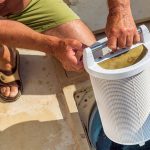
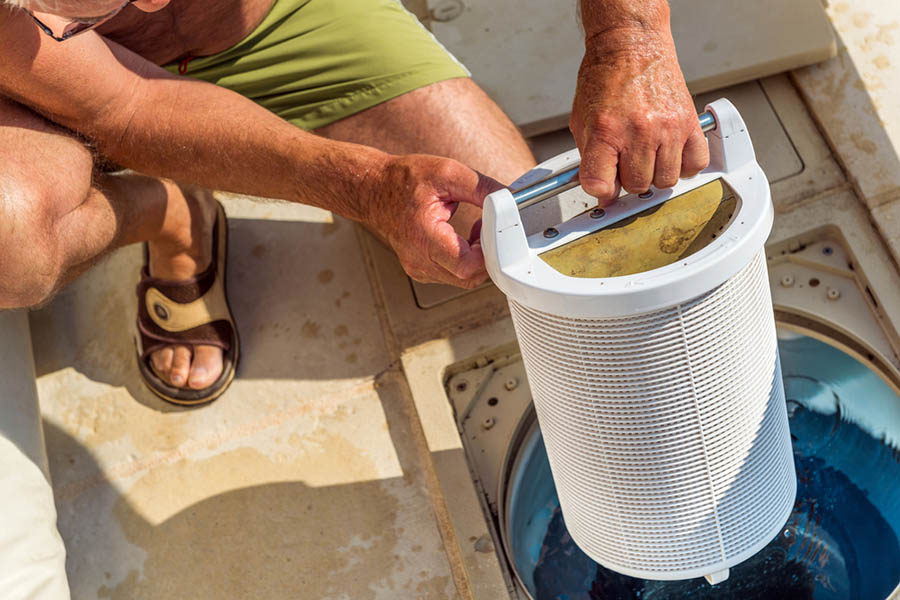
Cartridge filters use pleated filter media to capture debris.
Benefits include:
- Good filtration performance
- Lower water usage
- No backwashing required
Maintenance typically involves removing and cleaning the cartridge periodically.
Sand Filters
Sand filters use specially graded sand to trap contaminants.
Advantages include:
- Simple operation
- Durable design
- Relatively easy maintenance
Routine maintenance often involves backwashing to remove trapped debris.
DE Filters
DE (Diatomaceous Earth) filters use a fine filtration medium to capture very small particles.
Benefits include:
- Excellent water clarity
- Fine filtration capability
However, DE systems generally require more involved maintenance procedures.
Common Signs of Filter Problems
Many homeowners notice symptoms before they understand the cause.
The following warning signs may indicate filtration issues.
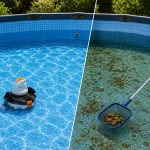
Cloudy Water
Cloudy water is one of the most common complaints.
Possible causes include:
- Dirty filters
- Improper maintenance
- Water chemistry issues
- Circulation problems
Importantly, cloudy water does not automatically mean filter failure.
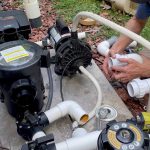
High Filter Pressure
Pressure gauges provide valuable information.
Higher-than-normal pressure often suggests:
- Restricted flow
- Dirty filter media
- Blockages within the system
Reduced Water Flow
Weak circulation may indicate:
- Filter restrictions
- Plumbing issues
- Pump problems
Reduced flow should always be investigated rather than ignored.
Frequent Cleaning Requirements
A filter that suddenly requires constant cleaning may be experiencing:
- Excessive debris loads
- Media deterioration
- Underlying circulation issues
Visible Damage
Cracks, leaks, broken components, or damaged filter media may indicate that repair or replacement should be considered.
A Simple Filter Diagnostic Framework
Many homeowners immediately assume replacement is necessary.
A better approach is to follow a simple process.
The C.L.E.A.R. Framework
| Step | Action | Purpose |
| C | Check the symptom | Identify what has changed |
| L | Look for simple causes | Rule out obvious issues |
| E | Evaluate maintenance history | Determine whether service is overdue |
| A | Assess equipment condition | Identify damage or wear |
| R | Review repair vs replacement | Choose the most practical solution |
This framework helps avoid unnecessary equipment purchases.
What Routine Filter Maintenance Involves
Regular maintenance is often the difference between a filter that lasts for years and one that develops premature problems.
1. Monitor Pressure Readings
Pressure gauges can reveal changes before performance problems become obvious.
Recording normal operating pressure provides a useful reference point.
2. Clean Filter Components
Cleaning schedules vary depending on:
- Filter type
- Pool usage
- Environmental conditions
For cartridge systems, this usually involves removing and rinsing cartridges.
For sand and DE systems, maintenance procedures differ according to manufacturer guidance.
3. Inspect for Damage
During cleaning, homeowners should look for:
- Cracks
- Tears
- Worn seals
- Damaged fittings
Small issues are often easier to address before they become major repairs.
4. Maintain Proper Water Chemistry
Balanced water helps protect filtration equipment.
Poor chemistry can contribute to scale, buildup, and premature wear.
5. Follow Manufacturer Instructions
Maintenance procedures differ significantly among systems.
General advice should never replace equipment-specific guidance.
When Filter Repair May Be the Right Choice
Not every filtration problem requires replacement.
Pool filter repair often makes sense when the issue is isolated and the equipment remains structurally sound.
Repair may be appropriate when:
- Seals are leaking
- Valves require replacement
- Minor fittings are damaged
- Internal components can be replaced
- The filter housing remains in good condition
A professional inspection can help determine whether repair is practical.
When Pool Filter Replacement Makes More Sense
Eventually, every filter reaches a point where replacement becomes the better option.
The Filter Is Near the End of Its Service Life
Older equipment often experiences multiple performance issues simultaneously.
Repairing one component may not solve future problems.
Structural Damage Exists
Cracked housings or major physical damage can compromise performance and safety.
Replacement Parts Are Difficult to Obtain
Availability can become a factor for aging equipment.
Performance Continues to Decline
When maintenance and repairs no longer restore effective filtration, pool filter replacement may provide a better long-term solution.
Choosing the Right Replacement Filter
Selecting a replacement involves more than matching dimensions.
Homeowners should consider:
Pool or Spa Size
Larger bodies of water require different filtration capacities than smaller systems.
Existing Pump Compatibility
The filter must work effectively with the pump’s flow characteristics.
Maintenance Preferences
Some homeowners prioritize easier cleaning.
Others prioritize maximum filtration performance.
Long-Term Operating Costs
Maintenance requirements, cleaning frequency, and replacement media costs all affect long-term ownership expenses.
Common Misconceptions About Filters
Misconception 1: Cloudy Water Means Filter Failure
Cloudy water can result from several causes, including water chemistry, circulation issues, or pump-related problems.
Misconception 2: More Expensive Filters Are Always Better
The best filter depends on the specific pool or spa system.
Misconception 3: Cleaning Fixes Every Problem
Maintenance is important, but damaged or aging equipment may require repair or replacement.
Misconception 4: All Filters Require the Same Maintenance
Different pool filter types require different maintenance procedures.
Cartridge, sand, and DE systems should never be treated identically.
Real-World Example
Imagine a homeowner notices cloudy water and higher filter pressure.
Assuming the filter has failed, they begin researching replacement options.
Before purchasing new equipment, they perform a basic inspection.
The cartridge is heavily clogged with debris.
After a thorough cleaning, pressure returns to normal and water clarity improves significantly.
In this situation, the problem was not filter failure. It was overdue maintenance.
This example highlights why diagnosis should always come before replacement.
Do This, Not That
| Do This | Not That |
| Check pressure readings regularly | Ignore changes in system performance |
| Follow maintenance schedules | Wait until water quality declines |
| Inspect components during cleaning | Assume all problems require replacement |
| Evaluate the entire circulation system | Focus only on the filter |
| Seek professional guidance for major issues | Replace equipment without diagnosis |
When Professional Help Is Appropriate
Professional evaluation may be helpful when:
- Leaks persist
- Pressure remains abnormal
- Water quality problems continue
- Structural damage is visible
- Replacement sizing is uncertain
- Multiple equipment issues exist
It is also important to remember that symptoms such as cloudy water or poor flow do not necessarily mean the filter itself has failed. Pump issues, plumbing restrictions, circulation problems, and water chemistry concerns can produce similar symptoms. Any repair or replacement recommendation should be based on the actual condition and compatibility of the equipment rather than assumptions.
For homeowners who need expert guidance, Feathers Bros Pool Service provides Pool filter repair services in Indianapolis, IN and can help evaluate filtration issues, determine whether maintenance, repair, or replacement is appropriate, and recommend the most practical solution. To schedule a filter inspection or discuss equipment concerns, call 317-522-8148, email [email protected].
Conclusion
Problems with Pool and Spa Filters do not automatically mean new equipment is needed. In many cases, proper maintenance or targeted repairs can restore performance and extend service life.
The most effective approach is to identify the symptom, investigate the cause, evaluate the filter’s condition, and then determine whether maintenance, repair, or replacement offers the best value. By focusing on diagnosis first, homeowners can make smarter decisions and avoid unnecessary expenses.
Summary
Pool and spa filters are essential for maintaining clean, clear water and supporting overall circulation performance. Common symptoms such as cloudy water, high pressure, and reduced flow may result from maintenance issues, repair needs, or aging equipment. Understanding filter types, maintenance requirements, and warning signs helps homeowners make informed decisions. The right solution depends on the actual condition of the filtration system rather than the symptom alone.
FAQs
1. What are the main types of pool and spa filters?
The most common filter types are cartridge filters, sand filters, and DE filters. Each has different maintenance requirements and filtration characteristics.
2. How often should pool filter maintenance be performed?
Maintenance frequency depends on filter type, pool usage, environmental conditions, and manufacturer recommendations.
3. How do homeowners know if they need pool filter repair?
Persistent leaks, damaged components, pressure issues, and declining performance may indicate that professional repair should be considered.
4. When is pool filter replacement the better option?
Replacement may make sense when the filter has major structural damage, declining performance, limited parts availability, or significant age-related wear.
5. Does Feathers Bros Pool Service provide filter inspections and repair services?
Yes. Homeowners experiencing filtration problems can request an evaluation to determine whether maintenance, repair, or replacement is the most practical solution.