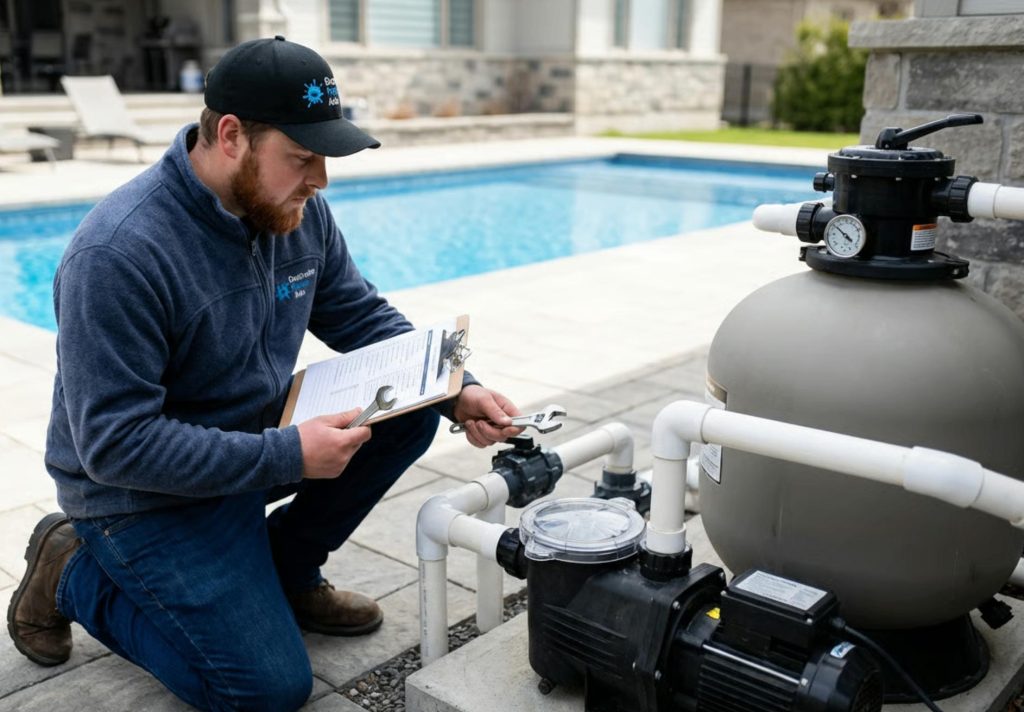
A pool can look perfect on the surface while hidden problems are quietly developing underneath. A pump that is working harder than normal, a filter that is slowly losing efficiency, or a small leak around equipment connections can turn into expensive repairs if ignored for too long.
Imagine stepping outside on a warm weekend, ready for a relaxing swim, only to find cloudy water, weak circulation, or equipment that suddenly will not start. Many of these frustrations can be avoided with a simple routine inspection.
A consistent pool equipment maintenance routine helps homeowners notice small warning signs before they become major problems. Monthly inspections do not require advanced technical skills, but they do require attention to the parts of your pool system that work every day to keep water clean, safe, and comfortable.
Key Takeaways
- Regular inspections help identify equipment issues before they become costly repairs.
- A monthly pool equipment review should include pumps, filters, heaters, and circulation components.
- Small changes in sound, water flow, or pressure readings can reveal early problems.
- A structured pool equipment maintenance checklist makes routine care easier for homeowners.
Why Monthly Pool Equipment Inspections Matter
Your pool equipment works together as one connected system. The pump moves water, the filter removes debris, the heater maintains comfort, and circulation components help distribute chemicals evenly.
When one part struggles, other components often have to work harder. Over time, this extra strain can reduce efficiency and shorten equipment life.
Many homeowners focus mainly on water chemistry and cleaning, but equipment health is equally important. A pool may have balanced chemicals and still experience problems if water is not circulating properly.
A monthly inspection creates an opportunity to catch issues such as:
- Unusual pump noises
- Reduced water flow
- Dirty or clogged filters
- Equipment leaks
- Unusual pressure readings
- Signs of wear or damage
For homeowners who want dependable results, following a clear pool equipment maintenance checklist provides a practical way to stay organized throughout the swimming season.
What Is Pool Equipment Maintenance?
Pool equipment maintenance is the regular inspection, cleaning, and monitoring of the mechanical components that keep a swimming pool operating properly. It includes checking pumps, filters, heaters, valves, and circulation systems for signs of wear or reduced performance.
The goal is not just fixing problems after they happen. It is creating a routine that helps maintain reliability, efficiency, and safe pool operation.
Monthly Pool Equipment Maintenance Checklist: What to Inspect
A good inspection does not need to take hours. The following steps cover the most important areas homeowners should review each month.
1. Inspect the Pool Pump
The pump is one of the most important parts of your pool system because it keeps water moving through the filtration process.
During a monthly inspection, check for:
- Strange humming, grinding, or rattling sounds
- Water leaks around connections
- Cracks or visible damage
- Reduced water movement
A simple pool pump inspection can reveal problems early. If the pump basket is filling with debris quickly or water flow seems weaker than usual, it may indicate that cleaning or professional attention is needed.
2. Check the Pool Filter Condition
Your filter removes unwanted particles from the water. Over time, debris buildup can reduce performance and make the system work harder.
Part of your routine should include pool filter cleaning and maintenance by checking:
- Filter pressure readings
- Visible debris buildup
- Cleaning schedules
- Signs of damaged components
The correct cleaning method depends on your filter type, but ignoring filter care can affect water clarity and circulation.
3. Review Pool Heater Performance
A heater may not receive attention until temperatures drop, but monthly checks help maintain reliability.
When inspecting your heater, look for:
- Unusual sounds
- Error messages or warning indicators
- Signs of corrosion
- Proper operation
Following basic pool heater maintenance tips can help identify issues before you need emergency repairs. A heater that struggles to maintain temperature may need evaluation before the swimming season becomes busy.
4. Examine Water Flow and Circulation
Good circulation helps distribute treated water throughout the pool. Poor circulation can create areas where debris collects or water quality changes.
When checking pool water circulation system performance, observe:
- Return jets
- Water movement
- Skimmer operation
- Valve positions
Strong circulation is a sign that your equipment is working together effectively.
A Simple Framework for Monthly Pool Equipment Checks
A helpful way to remember your inspection routine is the LOOK framework:
L – Listen
Pay attention to unusual sounds from pumps, heaters, or other equipment.
O – Observe
Look for leaks, cracks, corrosion, or changes in water movement.
O – Organize
Keep a record of inspections, cleaning dates, and any concerns.
K – Know when to call for help
Recognize when a small issue requires professional attention.
This approach makes pool equipment maintenance easier because it turns random checks into a repeatable habit.
Monthly Inspection Guide for Common Pool Equipment
| Practice | When it helps | Simple cue | Mistake |
| Pump inspection | Prevents circulation issues | Listen for unusual sounds | Ignoring new noises |
| Filter review | Maintains water clarity | Check pressure readings | Waiting until water looks dirty |
| Heater check | Supports reliable heating | Test operation regularly | Only checking before use |
| Equipment area inspection | Finds leaks early | Look around connections | Overlooking small drips |
Common Mistakes Homeowners Make
Even homeowners who care about their pools can overlook important details. Some common mistakes include:
Only Checking Equipment When Something Breaks
Many people wait until the water becomes cloudy or equipment stops working. By then, the repair may be more complicated.
Routine inspections help identify changes before they become urgent.
Ignoring Small Warning Signs
A small leak, unusual noise, or minor pressure change may seem harmless. However, these signs can indicate that a component is under stress.
Skipping a Maintenance Schedule
Without a routine, inspections are easy to forget. A pool maintenance schedule for homeowners creates consistency and helps prevent neglected equipment.
Assuming New Equipment Does Not Need Care
Even newer systems require monitoring. Regular attention helps confirm that equipment is operating correctly.
Real-World Example: Catching a Small Problem Early
Consider a homeowner who notices that their pool pump sounds slightly louder than usual during a monthly inspection. The water still looks clear, so it would be easy to ignore.
Instead, they investigate the change, check the equipment area, and notice reduced water flow. Addressing the issue early prevents the system from continuing to operate under unnecessary strain.
This example shows why routine inspections matter. Problems are often easier and less disruptive to handle when they are discovered early.
When Professional Pool Equipment Maintenance Makes Sense
Some tasks are manageable for homeowners, such as visual inspections, cleaning around equipment areas, and monitoring performance changes.
However, professional help may be needed when you notice:
- Electrical concerns
- Persistent leaks
- Equipment failures
- Repeated performance problems
- Complex repairs
Professional technicians can provide a deeper pool equipment inspection guide and identify issues that may not be obvious during a basic homeowner check.
For homeowners looking for reliable support, Feathers Bros Pool Service provides professional assistance with Pool Equipment Maintenance in Indianapolis, IN. You can contact the team at [email protected] or 317-522-8148 for pool equipment support and maintenance services.
Frequently Asked Questions
How often should pool equipment be inspected?
A monthly inspection is a practical routine for most homeowners. More frequent checks may be helpful during heavy pool use or periods of extreme weather.
What should be included in a pool equipment maintenance checklist?
A checklist should include pump inspection, filter condition, heater performance, circulation checks, visible leaks, and general equipment condition.
Can regular maintenance reduce repair costs?
Regular inspections can help identify developing problems early, which may reduce the chance of larger equipment failures.
When should I hire a professional for pool equipment problems?
Professional service is recommended when you notice electrical issues, equipment failure, repeated leaks, or problems that continue after basic maintenance.
Does Feathers Bros Pool Service help with pool equipment maintenance?
Yes. Feathers Bros Pool Service provides professional pool equipment maintenance support, inspections, and repair solutions for homeowners who want dependable pool operation.
Conclusion
A well-maintained pool depends on more than clean water. The equipment behind the scenes plays a major role in keeping your pool safe, efficient, and enjoyable.
Following a monthly pool equipment maintenance routine allows you to spot changes early, protect important components, and avoid unnecessary surprises. A simple inspection habit can make pool ownership easier and help your system perform reliably throughout the season.
Summary
Regular equipment inspections help homeowners maintain better pool performance and avoid preventable issues. A complete pool equipment maintenance checklist should include pumps, filters, heaters, and circulation systems. By creating a consistent inspection routine and knowing when to seek professional support, homeowners can keep their pools running smoothly year after year.