A saltwater pool can look effortless on a warm afternoon. The water is clear, the surface sparkles, and there is no pile of chlorine containers beside the equipment pad. But behind that calm surface, a saltwater system is quietly doing important work.
A saltwater pool is not maintenance-free. Its salt chlorine generator still needs clean water, balanced chemistry, good circulation, and regular equipment care. When those basics are ignored, small issues can turn into cloudy water, scale, poor chlorine production, or equipment trouble.
The good news is that saltwater pool care does not have to feel complicated. A consistent routine makes the work easier and helps homeowners notice problems before they become major repairs.
Key Takeaways
- A saltwater pool still requires regular water testing and chemical balancing.
- The salt chlorine generator and cell need routine inspection and care.
- Skimming, brushing, vacuuming, and filter maintenance support clear water.
- Seasonal checks help protect the pool and equipment throughout the year.
What Is a Saltwater Pool Maintenance Checklist?
A saltwater pool maintenance checklist is a routine guide for checking water chemistry, cleaning the pool, inspecting equipment, and caring for the salt system.
The purpose is simple. Instead of waiting until the water looks cloudy or the equipment stops working, homeowners follow small maintenance steps consistently.
Why Saltwater Pools Still Need Regular Care
One common misconception is that a saltwater pool does not use chlorine.
It does.
A salt chlorine generator converts dissolved salt into chlorine. That chlorine sanitizes the pool water. The generator makes the process more automatic, but it does not remove the need for testing, cleaning, or equipment maintenance.
Water chemistry also affects how well the entire system performs. Poor balance can contribute to scale, corrosion, swimmer discomfort, or reduced equipment performance.
The Centers for Disease Control and Prevention recommends that residential pool owners regularly check chlorine and pH, with testing recommended at least twice daily.
For homeowners, the important lesson is simple. A salt system reduces some manual work, but it does not replace responsible pool care.
The Saltwater Pool Maintenance Checklist
A useful routine can be divided into four areas: water, cleaning, circulation, and equipment.
1. Check the Water Chemistry
Water testing should be at the center of saltwater pool care.
Homeowners should monitor pH and chlorine and follow the operating ranges recommended by their salt system manufacturer. Salt levels should also be checked according to the equipment requirements.
Total alkalinity and calcium hardness deserve attention as well. These factors influence water balance and can affect the formation of scale.
When testing shows that something is outside the recommended range, adjustments should be made carefully. Chemical products should always be used according to their labels and the pool equipment manufacturer’s instructions.
A simple habit helps here. Keep a small record of water tests and adjustments. Patterns become easier to notice when readings are written down instead of remembered.
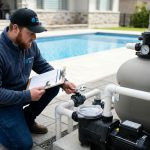
2. Inspect the Salt Chlorine Generator
The salt chlorine generator is one of the most important parts of the system.
Homeowners should regularly check the control panel for warning messages and confirm that the system is producing chlorine as expected.
The salt cell also deserves attention. Mineral buildup can collect on the cell plates and interfere with chlorine production.
The right cleaning schedule depends on the equipment, water conditions, and manufacturer’s instructions. Instead of cleaning the cell unnecessarily, homeowners should inspect it and clean it when buildup is present or the manufacturer recommends service.
When handling pool chemicals, proper protective equipment and label instructions are essential.
3. Keep the Pool Surface Clean
Leaves, grass, insects, and other debris can quickly collect on the water surface.
Regular skimming removes that material before it sinks and becomes harder to clean.
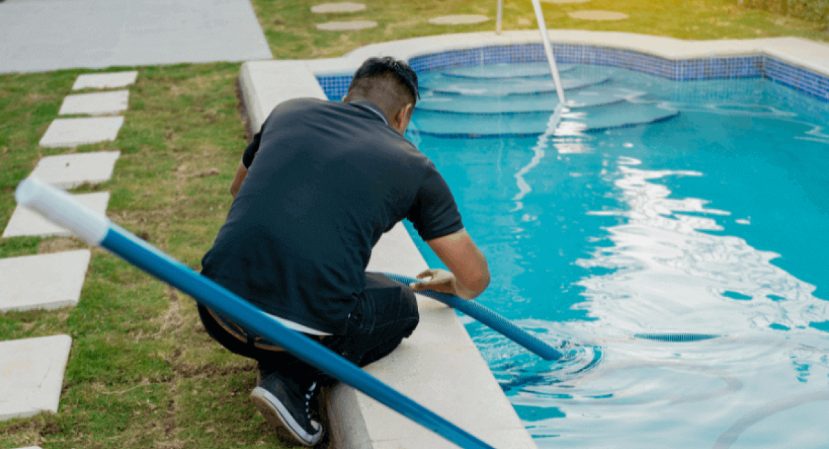
Brushing the walls, steps, corners, and other surfaces also helps loosen dirt and buildup. Vacuuming then removes debris from the pool floor.
These simple tasks are easy to postpone. That is often where maintenance becomes harder.
A few minutes of routine cleaning can be much easier than dealing with a pool that has been neglected for weeks.
4. Check the Skimmer and Pump Baskets
Good circulation is essential for saltwater pool maintenance.
The pump moves water through the filtration system and salt cell. If baskets become packed with leaves or debris, water flow can suffer.
Homeowners should inspect the skimmer and pump baskets regularly. Removing debris helps the circulation system work properly and makes it easier to spot unusual conditions.
A weak return flow, unusual pump noise, or repeated changes in pressure should not be ignored.
A Simple Weekly Maintenance Framework
The easiest way to stay consistent is to use a Test, Clean, Inspect, Record routine.
- Test: Check the water and compare the results with the recommended levels for the pool and salt system.
- Clean: Skim the surface, brush pool surfaces, and vacuum as needed.
- Inspect: Look at the salt system, baskets, filter, pump, and visible plumbing.
- Record: Write down unusual readings, warning messages, or changes in equipment performance.
This framework keeps saltwater pool care manageable. It also creates a simple history that can help identify recurring problems.
Daily, Weekly, and Monthly Pool Care
| Practice | When it helps | Simple cue | Common mistake |
| Water testing | Keeps chemistry under control | Test before problems appear | Testing only when water looks bad |
| Skimming | Removes floating debris | Check the surface regularly | Letting debris sink |
| Brushing | Helps remove dirt and buildup | Brush walls and corners | Cleaning only the visible floor |
| Basket cleaning | Supports water flow | Inspect baskets often | Waiting until flow drops |
| Filter care | Supports clear water | Follow filter instructions | Ignoring pressure or flow changes |
| Salt cell inspection | Supports chlorine production | Check for scale or buildup | Cleaning without following instructions |
| Equipment inspection | Catches early warning signs | Look and listen during operation | Ignoring unusual sounds |
The exact maintenance schedule should be adjusted for pool usage, weather, debris, water conditions, and equipment requirements.
Monthly Saltwater Pool Maintenance
Monthly care should go beyond surface cleaning.
Water should be checked for the key chemistry factors required by the pool’s equipment. The salt level should also be confirmed rather than assuming it has remained unchanged.
The filter should be inspected and cleaned according to its type and manufacturer instructions. Cartridge filters, sand filters, and other systems have different care requirements.
The salt cell should also be inspected for mineral deposits.
Homeowners should look closely at equipment connections, visible plumbing, valves, and the area around the pump. Small leaks, corrosion, or unusual moisture are worth investigating early.
Seasonal Saltwater Pool Care
Saltwater pool maintenance changes as the seasons change.
At opening, the pool should be cleaned, water chemistry should be checked, and the equipment should be inspected before regular swimming begins.
During the busiest part of the season, heavier use, rain, heat, and debris can change water conditions. A pool that needs little attention during a quiet week may need more care after a busy weekend or severe weather.
At closing, homeowners should follow the manufacturer’s winterization instructions. The salt cell and other equipment should receive appropriate seasonal care before the pool is covered or shut down.
This is especially important in climates where freezing temperatures can affect plumbing and equipment.
Common Saltwater Pool Maintenance Mistakes
Some mistakes happen because saltwater systems appear easier than traditional pool systems.
Assuming the Pool Is Maintenance-Free
Saltwater technology automates chlorine production. It does not automate every part of pool care.
Adding Salt Without Testing
Adding salt simply because the pool is a saltwater pool can create unnecessary imbalance. The existing salt level should be checked first.
Ignoring Scale on the Salt Cell
Visible mineral buildup should not be dismissed. The cell should be inspected and maintained according to the equipment manufacturer’s instructions.
Forgetting the Filter
Clear water depends on more than chlorine. Filtration and circulation are important parts of the system.
Waiting for Cloudy Water
Cloudy or green water is a warning sign, not a maintenance schedule. Regular care is easier than recovering a neglected pool.
A Real-World Example
Imagine a homeowner preparing for a Saturday pool gathering.
The pool looks clear on Friday morning, so the homeowner assumes everything is fine. A quick inspection, however, reveals a dirty skimmer basket and an equipment warning.
Instead of ignoring the warning, the homeowner checks the water, clears the basket, inspects the system, and follows the manufacturer’s troubleshooting instructions.
That small intervention could prevent a frustrating weekend and a larger equipment problem.
This is the real value of a checklist. It turns maintenance from a reaction into a routine.
When Professional Pool Maintenance Makes Sense
DIY maintenance works well for homeowners who have the time, knowledge, and confidence to manage routine care.
Professional help can be useful when water chemistry repeatedly becomes difficult to control, the salt system shows persistent warnings, the salt cell has significant buildup, circulation changes, or equipment behaves unexpectedly.
Professional Pool Maintenance Services in Indianapolis, IN can also provide a consistent maintenance routine for homeowners who prefer not to manage every task themselves.
A qualified professional can help inspect the pool, identify maintenance concerns, and handle more complicated equipment issues while following manufacturer recommendations.
FAQ
Are saltwater pools maintenance-free?
No. Saltwater pools still need water testing, cleaning, filtration, circulation, and salt system maintenance. The salt chlorine generator reduces some manual chlorine handling but does not eliminate routine care.
How often should a saltwater pool be cleaned?
Cleaning frequency depends on debris, weather, pool usage, and surrounding conditions. Skimming and checking baskets should be part of a regular routine, while brushing and vacuuming should be performed as needed.
Does a saltwater pool still need chlorine?
Yes. A salt chlorine generator produces chlorine from salt. The pool still needs appropriate chlorine levels for effective sanitation.
When should a salt cell be cleaned?
The cell should be inspected regularly and cleaned when mineral buildup is present or when the manufacturer recommends it. Over-cleaning can also be unnecessary, so the equipment instructions should guide the process.
Can professional pool maintenance help with a saltwater system?
Yes. Professional pool maintenance can help with water testing, cleaning, equipment inspection, filtration, salt system care, and routine maintenance. Complex equipment concerns should be handled by qualified professionals.
Keep Saltwater Pool Care Simple
A saltwater pool rewards consistency.
The most effective routine is not necessarily the most complicated one. It is the routine that gets followed. Regular testing, cleaning, circulation checks, salt system inspection, and seasonal care can help homeowners keep small issues from becoming larger problems.
A reliable saltwater pool maintenance checklist gives homeowners a clear place to start. It also makes it easier to recognize when a problem needs professional attention.
For homeowners who want dependable help with routine pool care, Feathers Bros Pool Service provides professional pool maintenance support. To discuss service, contact 317-522-8148 or [email protected], or visit the official website.
Summary
Saltwater pools still require regular attention even though their chlorine systems automate part of the sanitation process. A practical routine should include water testing, pool cleaning, filtration, circulation checks, salt cell inspection, and seasonal equipment care. Following a consistent checklist can make maintenance easier and help homeowners spot problems earlier. When routine care becomes difficult or equipment issues appear, professional pool maintenance can provide additional support.