
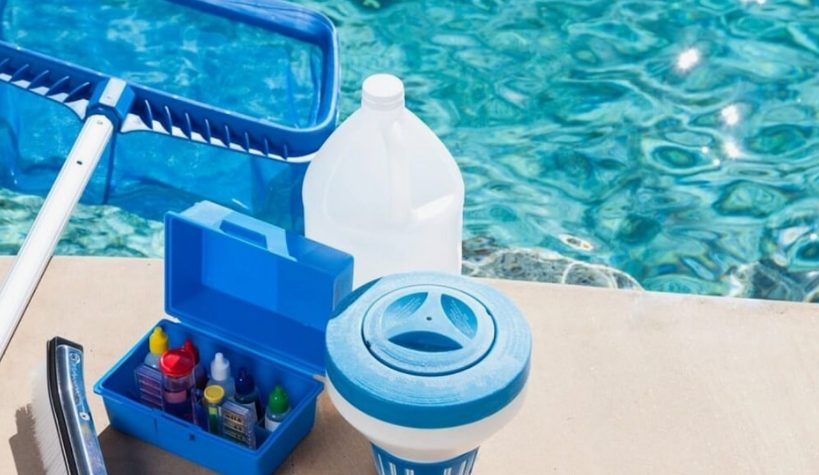
A pool can look perfectly clear and still have a water chemistry problem.
One of the most common questions homeowners face is simple. Does chlorine raise or lower pool pH?
The answer is not always the same. It depends on the type of chlorine being used. Some chlorine products can temporarily raise pH, while others tend to lower it. Some have little lasting effect once the chlorine has done its job.
That is why adding chlorine without checking pH can sometimes leave pool water out of balance.
Understanding does chlorine raise or lower pool pH helps homeowners make better decisions about testing, chemical adjustments, and routine pool care.
Key Takeaways
- Different chlorine products can affect pool pH in different ways.
- Liquid chlorine and calcium hypochlorite can cause a temporary pH increase.
- Trichlor generally lowers both pH and total alkalinity.
- Keeping chlorine and pH balanced helps support sanitation, swimmer comfort, and pool equipment.
- Testing both chlorine and pH regularly is more reliable than adjusting either chemical based on guesswork.
Does Chlorine Raise or Lower Pool pH?
Chlorine can either raise or lower pool pH depending on the chlorine product.
Liquid chlorine and calcium hypochlorite can temporarily raise pH when added to pool water. Dichlor tends to have a smaller effect, while trichlor is acidic and can lower pH over time.
There is another important detail. A chlorine product’s initial effect is not always the same as its long-term effect.
For example, liquid chlorine can cause a short-term pH increase. As the chlorine is consumed, chemical reactions in the water can reduce much of that initial effect. This means a homeowner may notice a temporary change without seeing a lasting pH increase.
That distinction is important when thinking about chlorine and pool pH.
Why Does Chlorine Affect Pool pH?
Chlorine does more than simply sanitize water.
When chlorine dissolves, it forms chemical compounds that participate in the disinfection process. One important form is hypochlorous acid, which helps destroy unwanted microorganisms.
The balance between different forms of chlorine is influenced by pH. As pH changes, the proportion of active chlorine also changes.
This creates a two-way relationship.
Chlorine products can influence pH, while pH can influence how effectively chlorine works.
The CDC recommends keeping residential pool pH within a range that balances disinfection, swimmer comfort, and equipment protection. Its current home pool guidance recommends a pH of 7.0 to 7.8.
Simple Definition
Pool pH measures how acidic or alkaline the water is. Chlorine is the sanitizer that helps control harmful microorganisms. Both need to be monitored because changes in one can affect overall water balance.
How Different Chlorine Types Affect pH
Not every chlorine product behaves the same way.
| Chlorine type | Typical pH effect | What homeowners should know | Common concern |
| Liquid chlorine | Temporary increase | The initial rise can fade as chlorine is consumed | Assuming the rise will continue |
| Calcium hypochlorite | Temporary increase | Can raise pH locally when added | Adding too much at once |
| Dichlor | Slight decrease | Usually has a smaller pH effect | Long-term chemical buildup |
| Trichlor | Lowers pH | Can also reduce total alkalinity | Allowing pH to fall too far |
| Saltwater chlorine generation | Usually little direct chemical effect | Pool pH may still trend upward for other reasons | Assuming saltwater means no pH maintenance |
These effects are explained in pool chemistry guidance from technical water-treatment sources. Liquid chlorine and calcium hypochlorite can temporarily increase pH, while trichlor has a stronger acidic effect.
The important lesson is simple. The word “chlorine” does not describe one identical chemical product.
Does Chlorine Lower pH?
Yes, some chlorine products can lower pH.
Trichlor is the clearest example. It is an acidic chlorine product that can reduce both pH and total alkalinity when used regularly.
This can create a familiar pattern for pool owners.
A homeowner notices that chlorine is needed regularly. Chlorine is added according to the product instructions. A few days later, the pH reading is lower than expected.
The homeowner may assume something is wrong with the test kit.
Sometimes, however, the chlorine product itself is part of the explanation.
This is why chlorine lower pH is not a question with one universal answer. The product label matters.
Does Chlorine Raise pH?
Yes, certain chlorine products can raise pH.
Liquid chlorine and calcium hypochlorite are both capable of causing an initial pH increase. The increase can be temporary rather than a permanent change in the pool’s chemistry.
This matters because a homeowner may test the water shortly after adding chlorine and see a higher pH.
That does not automatically mean the pool will remain at that level.
The amount added, the existing water chemistry, and the type of chlorine all influence what happens next.
The safest approach is to test the water rather than assume the result.
A Simple Framework for Chlorine and pH Balance
A practical way to think about how chlorine affects pH is the Test, Treat, Retest framework.
1. Test
Check the pool water before adding chemicals.
Testing gives the homeowner a starting point instead of relying on appearance alone.
2. Treat
Use the correct chemical for the specific problem. Follow the product label for dosage, handling, and application instructions.
Avoid adding several chemicals simply because the water does not look right.
3. Retest
Give the chemicals time to circulate according to the product instructions. Then test again.
This final step is easy to skip.
It is also one of the most useful habits in pool maintenance.
A chemical adjustment should be based on the water’s response, not on a guess about what might happen.
Why pH Matters When Chlorine Is Added
Chlorine and pH work together.
When pH moves too high, chlorine becomes less effective as a sanitizer. When pH becomes too low, the water can become more aggressive toward pool surfaces and equipment, while swimmers may experience discomfort.
The CDC explains that maintaining appropriate pH helps balance chlorine effectiveness, swimmer comfort, and protection of pool systems.
That is why pool water chemistry should be viewed as a system rather than a collection of unrelated numbers.
A pool owner who only checks chlorine can miss a developing pH problem.
A homeowner who only adjusts pH can overlook whether enough sanitizer is present.
Both readings matter.
Common Mistakes Homeowners Make
Adding chlorine without testing
It can be tempting to add chlorine whenever the water looks dull.
Clear water, however, does not tell the entire story.
Testing provides useful information about what the water actually needs.
Assuming every chlorine product behaves the same
This is one of the biggest misconceptions about pool chemicals.
Liquid chlorine, calcium hypochlorite, dichlor, and trichlor have different chemical properties. Their effects on pH can also differ.
Adjusting pH repeatedly without checking alkalinity
If pH keeps moving after repeated adjustments, the broader water chemistry may need attention.
Total alkalinity helps resist rapid pH changes, so it should not be ignored when troubleshooting recurring pH problems.
Adding too much chemical at once
More chemical does not always mean faster results.
Overcorrection can create a second problem that requires another adjustment.
Following product instructions and allowing the water to circulate helps reduce unnecessary chemical swings.
Do This, Not That
| Do this | Not that |
| Test chlorine and pH regularly | Guess based on water appearance |
| Identify the chlorine product first | Treat every chlorine product the same |
| Follow product instructions | Estimate chemical amounts |
| Retest after adjustments | Keep adding chemicals without checking |
| Look at overall water balance | Focus on one reading alone |
A Real-World Pool Example
Imagine a homeowner checks the pool before a busy weekend.
The chlorine level needs attention, so the homeowner adds the usual chlorine product. Later, the pH reading is different from the earlier test.
The first reaction may be to assume the test kit is wrong.
A better approach is to consider the chlorine type first.
If the product can temporarily raise pH, the change may be related to the treatment. If an acidic chlorine product is being used regularly, the opposite trend may occur.
The homeowner can then test again after circulation and make only the adjustment the water actually needs.
That small change in approach can make pool chemical balancing much less frustrating.
When Should a Professional Handle Pool Chemical Balancing?
Routine testing is something many homeowners can learn.
However, professional help can be useful when pH repeatedly moves out of range, chlorine readings seem inconsistent, water remains cloudy, or chemical adjustments do not produce expected results.
Recurring problems can have several causes. Water balance, sanitizer choice, pool usage, environmental conditions, and equipment performance can all play a role.
Professional Pool Chemical Balancing in Indianapolis, IN can help homeowners identify the underlying issue instead of repeatedly treating the symptoms.
For homeowners who prefer expert assistance, Feathers Bros Pool Service can help with pool water chemistry and chemical balancing.
Frequently Asked Questions
Does chlorine raise or lower pool pH?
It depends on the chlorine product. Liquid chlorine and calcium hypochlorite can temporarily raise pH, while trichlor generally lowers pH. Other products may have a smaller or more complex effect.
Should pH be checked after adding chlorine?
Yes. Chlorine and pH are connected, so checking both helps confirm whether the water remains balanced. The CDC recommends routinely checking both parameters for residential pools.
Can chlorine shock change pool pH?
Yes. The effect depends on the type of shock product used. Some chlorine shock products can temporarily increase pH, while other chlorine products can lower it.
How often should pool water be tested?
Testing frequency depends on pool use, weather, water conditions, and the type of pool system. Regular testing is important, especially when chemical adjustments are being made.
When is professional pool chemical balancing worth it?
Professional service can be useful when chemical levels repeatedly drift, water quality problems continue, or a homeowner is unsure which adjustment the pool needs. It can also save time when several water chemistry issues appear at once.
Conclusion
So, does chlorine raise or lower pool pH? The honest answer is that it depends on the type of chlorine and how it behaves in the water.
Some products cause a temporary pH increase. Others can lower pH over time. The long-term effect may also differ from the initial reaction.
The best approach is not to guess.
Test the water, identify the chlorine product, make measured adjustments, and retest. Keeping chlorine and pH in balance supports cleaner water, better sanitizer performance, swimmer comfort, and healthier pool equipment.
When repeated adjustments do not solve the problem, professional pool chemical balancing can provide a more reliable path forward.
Ready for professional pool chemical balancing?
Contact Feathers Bros Pool Service at 317-522-8148 or 463-287-0096, or email [email protected] for assistance with maintaining properly balanced pool water.