A swimming pool may look peaceful during winter, but freezing temperatures can create problems beneath the surface. Water left inside pool plumbing can freeze, expand, and put pressure on pipes, fittings, and connected equipment. The damage may not become obvious until the weather warms up.
Can pool pipes freeze in winter? Yes. Pool pipes can freeze when water remains inside them during prolonged freezing temperatures. The risk depends on pipe location, insulation, water circulation, and winterization.
For Indianapolis homeowners, preparing pool plumbing before winter arrives is an important part of seasonal maintenance. A little attention before the first hard freeze can help prevent unexpected leaks and equipment problems.
Key Takeaways
- Pool pipes can freeze when water remains inside plumbing during freezing weather.
- Frozen water expands and can crack pipes, fittings, and other plumbing components.
- Reduced water flow, unusual pump behavior, and visible leaks may indicate freeze-related damage.
- Proper pool winterization helps protect plumbing and equipment during colder months.
- Professional inspection is useful when homeowners suspect frozen, cracked, or damaged pipes.
Can Pool Pipes Freeze During Winter?
Yes, pool pipes can freeze during winter, especially when temperatures remain below freezing for extended periods. The risk increases when water sits inside exposed plumbing without adequate protection.
Swimming pool plumbing connects several components. These include the skimmer, main drain, pump, filter, heater, and return lines. Water can remain trapped in these sections if the pool is not winterized correctly.
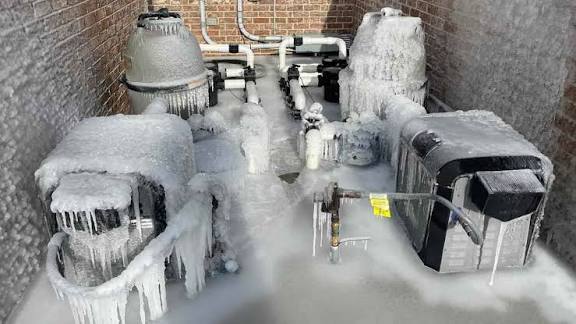
When temperatures drop, that trapped water may begin to freeze. As water turns into ice, it expands and creates pressure inside the plumbing.
This pressure can damage pipe walls, joints, valves, and fittings. Even a small crack can become a noticeable leak when the system starts operating again.
Indianapolis homeowners should pay particular attention to plumbing exposed to cold air. Pipes near equipment pads and above-ground connections may need extra protection.
Why Does Freezing Water Damage Pool Pipes?
Water behaves differently when it freezes. Unlike many materials, it expands as it changes from liquid into solid ice.
When water freezes inside a closed pipe, the expanding ice can create pressure against the pipe walls. This pressure may cause cracks or damage weak connections.
The problem is not always visible immediately. Some damage only becomes noticeable after the ice melts and water begins moving through the plumbing again.
That is why winter preparation matters even when the pool appears completely fine.
6 Warning Signs of Frozen Pool Pipes
Frozen pool pipes are not always easy to identify. Sometimes the first warning appears in the equipment rather than the plumbing itself.
Recognizing unusual changes early can help homeowners avoid additional damage.
1. Reduced or No Water Flow
One possible sign of frozen pool pipes is reduced water circulation.
If ice blocks part of a plumbing line, water may struggle to move through the system. Return jets may produce weaker flow or stop delivering water altogether.
However, reduced circulation does not automatically mean frozen pipes. A clogged filter, closed valve, or pump problem can produce similar symptoms.
2. Unusual Pump Noise
A pool pump may sound different when water cannot move through the plumbing correctly.
Homeowners might notice unusual humming, rattling, or changes in normal operating sounds.
A pump running without enough water can also become damaged. If freezing or a blockage is suspected, the equipment should not be forced to operate.
3. Visible Cracks Around Pipes and Fittings
Small cracks around exposed plumbing connections can indicate freeze-related damage.
Pay attention to:
- PVC pipe connections.
- Valves and unions.
- Exposed plumbing near the pump.
- Filter connections.
- Outdoor equipment fittings.
Not every crack results from freezing. However, damaged connections should be inspected before the system returns to normal operation.
4. Water Leaks After Temperatures Rise
Some homeowners notice nothing unusual during the coldest days. Then, after temperatures increase, water begins collecting around the equipment area.
This can happen when ice melts inside a pipe that was already damaged.
Look for unexplained puddles, wet soil, dripping connections, or water around equipment.
A leak that appears after winter should not be ignored.
5. Unusual Pressure Readings
Changes in filter pressure can sometimes indicate a circulation problem.
If water cannot move through the plumbing normally, the system may behave differently than usual.
However, pressure changes have several possible causes. A dirty filter, blocked line, or equipment issue may produce similar symptoms.
Homeowners should compare readings with normal operating conditions rather than assuming freezing is responsible.
6. Equipment Fails to Restart Normally
When spring arrives, a pool system may not operate as expected.
The pump might struggle to prime, water may fail to reach the returns, or leaks may appear around connections.
These problems can indicate winter damage, although other equipment issues are also possible.
A proper inspection can help identify the actual cause before further operation.
Which Pool Components Are Most at Risk?
Not every part of a swimming pool has the same exposure to freezing temperatures.
Some plumbing components are more vulnerable because they contain trapped water or sit outside the ground.
| Pool component | Potential winter risk | What homeowners should check |
| Exposed PVC pipes | Water inside may freeze and cause cracks | Visible damage and proper winterization |
| Skimmer lines | Trapped water may freeze | Correct winter closing procedures |
| Pump housing | Remaining water may freeze | Complete drainage according to manufacturer instructions |
| Filter system | Water inside can freeze | Proper preparation and protection |
| Valves and fittings | Trapped water may expand | Cracks, loose connections, and leaks |
| Heater plumbing | Water may remain inside connected lines | Manufacturer-recommended winterization |
Underground plumbing is not automatically protected from freezing. Its exposure depends on burial depth, soil conditions, and local temperatures.
The most important consideration is whether water remains in vulnerable plumbing sections.
How to Prevent Pool Pipes From Freezing
Preventing frozen pool plumbing starts before winter temperatures become severe.
Homeowners should approach winterization as a complete process rather than focusing on one pipe or piece of equipment.
The following practices can help reduce freeze-related risks.
1. Schedule Proper Pool Winterization
Proper pool winterization prepares plumbing and equipment for colder weather.
The process may include lowering the water level when appropriate, preparing plumbing lines, draining equipment, and protecting vulnerable connections.
The exact procedure depends on the pool design and equipment instructions.
For homeowners unfamiliar with the process, professional pool closing services can help ensure important components receive attention.
2. Remove Water From Vulnerable Plumbing Lines
Water left inside exposed plumbing creates a potential freezing risk.
During winterization, appropriate lines must be cleared using methods suitable for the pool system.
This may involve removing water from skimmer lines, return lines, and other vulnerable sections.
Homeowners should not guess which lines require attention. Incorrect procedures can leave water trapped or damage plumbing components.
3. Drain Pool Equipment Correctly
Pumps, filters, heaters, and other equipment may contain water even after normal operation stops.
Manufacturer instructions should guide the winter preparation process.
Equipment that requires draining should be prepared carefully. Homeowners should never assume that switching off the power removes water from the system.
4. Protect Exposed Pipes and Connections
Insulation can help reduce heat loss around certain exposed plumbing sections.
However, insulation alone does not guarantee freeze protection. It cannot replace proper winterization when water remains trapped inside vulnerable pipes.
Pay particular attention to connections near outdoor equipment pads.
5. Check Automatic Freeze Protection
Some pool systems include automatic freeze-protection features.
These controls may operate the pump when temperatures reach certain conditions, helping maintain water movement.
However, they are not a replacement for proper winterization.
Homeowners should understand how their system works and follow the manufacturer’s operating instructions. Power interruptions or equipment problems can also affect protection.
6. Inspect the Pool Before and After Winter
A visual inspection can help identify problems before they become more serious.
Check exposed plumbing, equipment connections, valves, and areas around the pump.
After winter, look for leaks, cracks, and unusual equipment behavior before returning the pool to normal operation.
A Simple Pool Winterization Checklist
A consistent maintenance routine makes winter preparation easier and helps homeowners avoid overlooked plumbing problems. Before freezing temperatures arrive, homeowners should focus on these essential steps:
- Inspect exposed pipes: Look for cracks, loose fittings, and signs of existing damage before winter begins.
- Prepare plumbing lines: Ensure vulnerable plumbing lines are properly winterized to prevent water from remaining trapped inside.
- Drain pool equipment: Prepare pumps, filters, heaters, and other equipment according to manufacturer instructions.
- Protect exposed connections: Use appropriate insulation where needed, but do not rely on insulation as a replacement for proper winterization.
- Check freeze protection: Understand how automatic freeze-protection features work and follow the equipment manufacturer’s recommendations.
- Inspect after winter: During spring opening, check for leaks, damaged fittings, and unusual equipment behavior before restarting normal circulation.
Remember: Every pool has different winterization requirements. The correct preparation depends on its plumbing layout, equipment, and exposure to freezing temperatures.
What Should Homeowners Do If Pool Pipes Freeze?
If homeowners suspect frozen plumbing, the safest approach is to stop and assess the situation before operating the equipment.
Trying to force water through frozen pipes can make existing damage worse.
The following steps provide a sensible starting point:
- Stop equipment operation: If a blockage or freeze-related problem is suspected, avoid running the pump against restricted plumbing.
- Check visible plumbing: Look for cracks, leaks, damaged fittings, or unusual changes around the equipment.
- Avoid aggressive thawing: Never use an open flame or excessive heat on pool pipes.
- Allow a safe assessment: Do not force valves or fittings that may be frozen.
- Arrange an inspection: Have damaged or potentially frozen plumbing checked before restarting the system.
Homeowners should also follow equipment safety instructions. Electrical components and wet equipment require particular care.
Can Frozen Pool Pipes Thaw on Their Own?
Yes, ice inside pool plumbing can melt when temperatures rise. However, thawing does not mean the plumbing is undamaged.
A pipe may have developed a crack while the water was frozen. Once the ice melts, water can escape through that damaged section.
This is why a spring inspection is important, even when the pool appears normal after winter.
Common Mistakes That Increase Freeze Damage
Some winter maintenance mistakes can leave pool plumbing vulnerable.
One common mistake is assuming that shutting down the pump completely protects the system. Turning off equipment does not remove water trapped inside pipes.
Another mistake is relying only on pipe insulation. Insulation can help in certain situations, but it cannot replace proper winterization.
Homeowners may also overlook valves, fittings, and equipment connections. These smaller components can hold water and develop freeze-related damage.
Finally, restarting the pool too quickly in spring can create additional problems. Damaged plumbing should be inspected before normal circulation resumes.
A Real-World Example: Why Winter Preparation Matters
Consider a homeowner preparing an outdoor swimming pool for an Indianapolis winter.
The pump is switched off, the pool cover is installed, and the equipment area appears ready for colder weather.
However, water remains inside an exposed plumbing section.
After several days of freezing temperatures, that water freezes and expands. The pipe develops a small crack that remains unnoticed.
When spring arrives, the homeowner starts the pump. Water begins leaking around the damaged connection.
A simple winterization oversight has now become a plumbing repair concern.
This example highlights an important point: covering a pool and preparing its plumbing are two different tasks.
When Should Homeowners Hire a Pool Professional?
Professional assistance can be helpful when homeowners are unsure how to prepare their plumbing for winter.
It is also worth considering when the pool has complicated plumbing, connected heating equipment, automation controls, or previous freeze-related damage.
Professional inspection may be appropriate when:
- Pool pipes have visible cracks or leaks.
- Water circulation changes unexpectedly.
- The pump struggles to prime after winter.
- Equipment connections show signs of damage.
- Homeowners are unsure how to winterize individual plumbing lines.
- The pool has not received proper seasonal closing maintenance.
For Indianapolis homeowners, arranging Pool Maintenance Services in Indianapolis, IN, before freezing weather arrives can help identify vulnerable equipment and plumbing.
A professional can assess the pool’s setup and recommend appropriate winter preparation. This does not eliminate every possible risk, but it helps reduce avoidable problems.
Protect Pool Plumbing Before Winter Arrives
Winter can be hard on swimming pool plumbing, especially when water remains inside exposed pipes and equipment. Understanding the warning signs helps homeowners recognize possible problems before they become larger repair concerns.
The most effective approach is proper winterization, regular inspection, and attention to manufacturer recommendations. Homeowners should not rely on a pool cover, insulation, or pump operation alone.
For homeowners who need help preparing their pools for colder weather, Feathers Bros Pool Service provides seasonal pool care and maintenance support in Indianapolis. To discuss pool closing, equipment maintenance, or plumbing concerns, call 317-522-8148 or 463-287-0096, email [email protected].
FAQ
1. Can Pool Pipes Freeze Even When the Pool Is Covered?
Yes. A pool cover protects the water surface from debris and helps with other aspects of seasonal care. However, it does not automatically protect plumbing lines, pumps, or exposed equipment from freezing.
2. At What Temperature Can Pool Pipes Freeze?
Pool pipes can freeze when their surrounding temperatures remain below 32°F (0°C) long enough for the water inside to lose heat and freeze. Actual risk depends on exposure, insulation, water movement, and other conditions.
3. How Can Homeowners Tell If Pool Pipes Are Frozen?
Reduced water flow, unusual pump behavior, and visible plumbing problems may indicate frozen pipes. However, these symptoms can also result from blockages or equipment failures.
4. Can Frozen Pool Pipes Cause Leaks in Spring?
Yes. Ice expansion may crack plumbing while temperatures are low. When the ice melts, water can escape through the damaged section. That is why spring inspections are important.
5. Does Running the Pool Pump Prevent Frozen Pipes?
Water circulation may help reduce freezing risk under certain conditions. However, running the pump is not a guaranteed solution. Proper winterization and manufacturer-recommended freeze protection remain important.