
Have you ever tested your pool water, added chemicals, and still wondered why the numbers keep moving in the wrong direction? Many pool owners experience this frustrating cycle: the pH looks fine one day, then suddenly becomes difficult to control a few days later. The reason often comes down to a hidden factor, alkalinity.
Understanding Pool Alkalinity vs pH is one of the most important parts of maintaining healthy pool water. While these two measurements are closely connected, they play different roles. pH tells you how acidic or basic your water is, while alkalinity helps keep that pH stable. When one is out of balance, the other can quickly become a challenge to manage.
A well-maintained pool is not just about adding chlorine or removing debris. It is about understanding the relationship between different elements of pool water chemistry and creating a stable environment where every chemical works properly.
Key Takeaways
- pH measures the acidity or basicity of pool water, while total alkalinity helps control pH stability.
- Low alkalinity can cause pH levels to fluctuate frequently, while high alkalinity can make pH difficult to adjust.
- Proper testing and gradual adjustments are essential for maintaining balanced pool water.
- Understanding Pool Alkalinity vs pH helps prevent cloudy water, equipment problems, and unnecessary chemical use.
Understanding Pool Alkalinity vs pH: What Is the Difference?
Many pool owners assume alkalinity and pH are the same thing because both affect water balance. However, they measure two different aspects of your pool’s chemistry.
pH measures the level of acidity or basicity in your pool water. The ideal pool pH level is generally maintained within a range that supports swimmer comfort and allows chlorine to work effectively.
Total alkalinity, on the other hand, refers to the water’s ability to resist sudden pH changes. Think of alkalinity as a protective shield that helps keep pH from moving too quickly.
A simple way to picture the relationship:
- pH is the current condition of your water.
- Alkalinity is the stabilizing force behind that condition.
When alkalinity is balanced, your pH is usually easier to maintain. When alkalinity is too low or too high, keeping the pH steady becomes much more difficult.
How Alkalinity Affects Pool pH
One of the biggest misunderstandings in pool maintenance is trying to adjust pH without checking alkalinity first. Pool owners may repeatedly add chemicals to raise or lower pH, only to find that the water chemistry keeps shifting.
This happens because alkalinity influences how quickly pH changes. When total alkalinity is too low, even small factors like rain, fresh water additions, or swimmer activity can cause noticeable pH swings.
Common low pool alkalinity symptoms may include:
- Rapid changes in pH readings
- Difficulty keeping water balanced
- Increased risk of corrosion on pool equipment
- Potential irritation for swimmers
High alkalinity creates a different set of challenges. It can cause pH levels to rise and become resistant to adjustment. This may contribute to cloudy water, mineral buildup, or reduced efficiency of certain pool chemicals.
Understanding how alkalinity affects pool pH allows pool owners to solve the underlying issue instead of repeatedly treating the symptoms.
The Right Order for Balancing Pool Water
A common question among pool owners is: Should you adjust alkalinity or pH first?
In many situations, alkalinity should be evaluated before making major pH adjustments. Since alkalinity helps stabilize pH, correcting it first can make later pH adjustments more predictable.
A Simple Pool Water Balance Process
1. Test your pool water
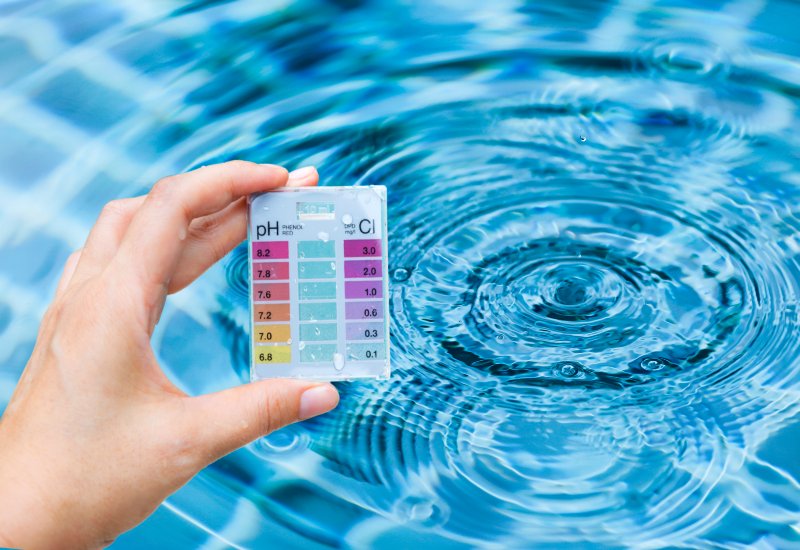
Start by checking pH, total alkalinity, and sanitizer levels. Accurate testing gives you a clear picture of what needs attention.
2. Evaluate alkalinity levels
If alkalinity is outside the recommended range, focus on correcting it before making frequent pH changes.
3. Adjust gradually
Avoid adding large amounts of chemicals at once. Small adjustments allow the water to respond more naturally.
4. Retest after allowing time for circulation
Give chemicals time to distribute throughout the pool before checking results again.
5. Maintain regular testing
Consistent monitoring helps prevent major chemistry problems before they develop.
This approach is the foundation of effective how to balance pool water practices.
A Practical Framework for Pool Water Balance
A simple framework can make pool maintenance easier to understand:
The “Stability → Balance → Maintain” Method
1. Stability: Control alkalinity first
Before chasing pH numbers, make sure your water has a stable foundation. Balanced alkalinity creates a more predictable environment.
2. Balance: Adjust pH carefully
Once alkalinity is properly managed, fine-tune pH levels to support comfort, sanitation, and water clarity.
3. Maintain: Test consistently
Pool chemistry is not a one-time task. Regular testing helps you catch small changes before they become bigger problems.
This method helps transform pool care from a guessing game into a routine process.
Common Mistakes Pool Owners Make With Water Chemistry
Even experienced pool owners can make mistakes when managing chemicals. Understanding these common issues can save time and prevent frustration.
Mistake 1: Adjusting pH Without Checking Alkalinity
A pool owner may notice high pH and immediately add a reducer. However, if alkalinity is causing instability, the pH may continue changing.
Mistake 2: Adding Too Much Chemical at Once
More chemicals do not always mean faster results. Large adjustments can create new problems and make the water harder to balance.
Mistake 3: Ignoring Regular Testing
Pool water changes constantly due to weather, usage, and environmental factors. Waiting until the water looks cloudy or uncomfortable often means the imbalance has already progressed.
Mistake 4: Focusing Only on Appearance
Clear water does not always mean perfectly balanced water. Proper testing provides information that your eyes cannot always detect.
As the famous inventor Benjamin Franklin once said, “An investment in knowledge always pays the best interest.” Learning the basics of pool chemistry helps you make better decisions and protect your investment.
Pool Alkalinity vs pH: Common Problems and Solutions
Practice | When It Helps | Simple Cue | Mistake to Avoid |
Testing alkalinity regularly | When pH changes frequently | pH does not stay consistent | Only testing pH |
Adjusting alkalinity first | When water chemistry feels unstable | Frequent chemical adjustments are needed | Making random chemical changes |
Monitoring pH levels | For swimmer comfort and sanitizer performance | Water balance readings change | Ignoring small changes |
Gradual chemical additions | During corrections | Levels are slightly outside range | Adding excessive chemicals quickly |
A Realistic Pool Owner Example
Imagine a homeowner who notices their pool water looks slightly cloudy. They test the water and discover the pH is high. They add a pH reducer, and the reading improves temporarily.
A few days later, the pH rises again.
The issue was not simply the pH. It was an unstable alkalinity level causing the pH to move repeatedly. After correcting the alkalinity and then adjusting the pH, the water becomes much easier to manage.
This type of situation is common because many pool problems are connected rather than isolated. Looking at the complete picture of water chemistry leads to better long-term results.
Why Professional Pool Chemical Balancing Can Make a Difference
Pool maintenance requires more than adding chemicals based on a single test result. Each pool responds differently depending on factors such as water source, weather conditions, usage, and equipment.
For homeowners who want reliable results without constant trial and error, professional assistance can provide a more consistent approach. Services like Pool Chemical Balancing in Indianapolis, IN focus on maintaining proper water conditions through testing, adjustments, and ongoing care.
At Feathers Bros Pool Service, the goal is to help pool owners enjoy clean, comfortable water while reducing the stress of managing complicated chemical balance issues.
Conclusion:
Maintaining a clean and comfortable pool starts with understanding the relationship between different parts of water chemistry. Pool Alkalinity vs pH is not about choosing one over the other. It is about recognizing how they work together to create stable, healthy water.
Alkalinity provides the foundation that helps control pH movement, while pH determines whether the water remains comfortable for swimmers and suitable for pool equipment. When both levels are properly managed, your pool becomes easier to maintain, chemicals work more effectively, and common problems become less frequent.
Many pool owners spend time correcting visible issues like cloudy water or irritation without addressing the underlying cause. By learning how alkalinity and pH interact, you can take a more proactive approach to pool care.
Whether you handle maintenance yourself or rely on professionals, regular testing and thoughtful adjustments are the keys to long-term success. A balanced pool is not achieved through guesswork. It comes from understanding the chemistry behind the water.
At Feathers Bros Pool Service, we help homeowners maintain dependable water quality through professional testing, maintenance, and expert guidance. With the right approach, your pool can remain clear, comfortable, and ready to enjoy throughout the swimming season.
Summary
Pool Alkalinity vs pH explains the important relationship between water stability and acidity levels. Alkalinity helps prevent sudden pH changes, while pH determines how balanced and comfortable the water is for swimmers. Maintaining both levels correctly supports better water clarity, protects pool equipment, and improves overall pool health. Regular testing and proper adjustments make pool maintenance easier and more effective.
Frequently Asked Questions
1. What is the difference between pool alkalinity and pH?
Pool alkalinity measures the water’s ability to resist changes in acidity, while pH measures how acidic or basic the water currently is. Alkalinity acts as a stabilizer that helps keep pH levels consistent.
2. Should I adjust pool alkalinity or pH first?
In many cases, alkalinity should be checked and corrected before making significant pH adjustments. Since alkalinity affects pH stability, balancing it first can make pH changes easier to control.
3. How often should I test my pool alkalinity and pH?
Testing frequency depends on factors such as pool usage, weather, and water conditions. Regular testing helps identify changes early and prevents larger water balance problems.
4. Can Feathers Bros Pool Service help with pool water balance?
Yes. Feathers Bros Pool Service provides professional pool care solutions to help homeowners maintain proper water chemistry, including testing, adjustments, and ongoing maintenance support.
5. When should I hire a professional for pool chemical balancing?
Professional help may be beneficial when pH levels continue changing, chemicals do not seem to work properly, water remains cloudy, or you are unsure how to correct an imbalance. Experts can identify the underlying issue and create a more effective maintenance plan.