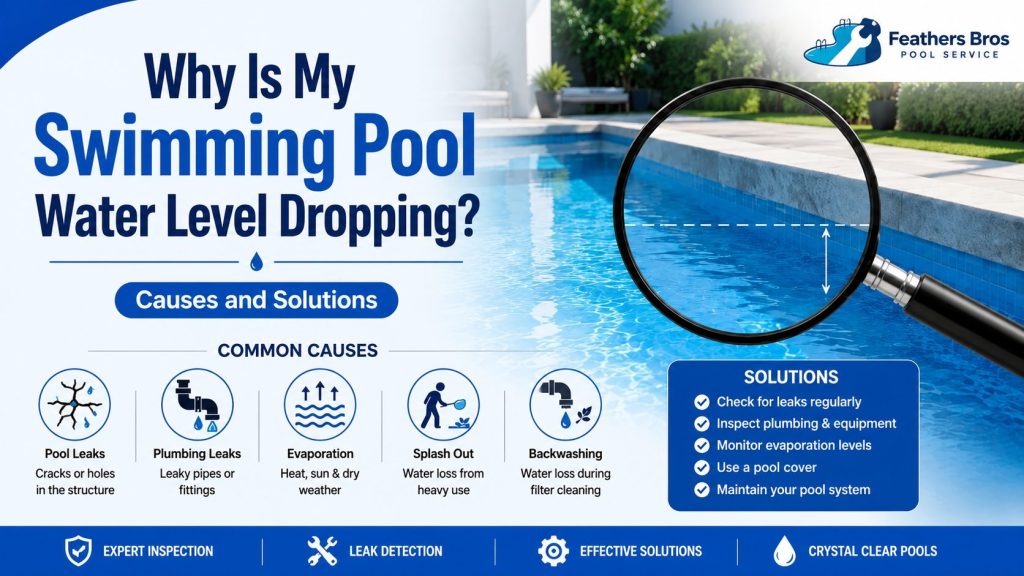
A pool that slowly drops in water level can be easy to overlook at first. You may think it is just the hot weather, a little extra splashing, or normal maintenance. But when you find yourself adding water more often than usual, that small concern can turn into a bigger question: Why is my pool losing water?
Imagine preparing your pool for a weekend swim, only to notice the water level has fallen several inches since your last check. Before assuming the worst, it is important to understand that water loss can happen for several reasons. Some causes are completely normal, while others may point to leaks, equipment problems, or structural damage that needs attention.
Understanding the difference between ordinary water loss and a potential issue helps you protect your pool, avoid unnecessary repairs, and maintain a cleaner swimming environment. This guide explains the common causes of pool losing water, how to identify the problem, and the solutions that can help restore your pool’s efficiency.
Key Takeaways
- Some water loss is normal due to evaporation, swimming activity, and weather conditions.
- A consistent drop in water level may indicate leaks, damaged equipment, or plumbing problems.
- Simple testing methods can help determine whether you are dealing with evaporation or a leak.
- Professional inspection can help identify hidden problems before they become expensive repairs.
Understanding Why Your Pool Is Losing Water
A swimming pool is constantly exposed to conditions that naturally remove water. Sunlight, wind, temperature changes, and regular use all affect water levels. However, when the amount of water loss seems excessive, it is time to investigate.
The first step is understanding that not every drop in water level means your pool has a serious problem. The key is recognizing patterns.
A pool that loses a small amount of water during hot summer days may simply be experiencing evaporation. On the other hand, a pool that continues losing water even when it is covered or unused may have an underlying issue.
Pool losing water problems usually fall into four main categories:
- Natural evaporation
- Pool leaks
- Equipment-related issues
- Plumbing or structural damage
Finding the correct cause makes the solution much easier.
Pool Evaporation vs Leak: How to Tell the Difference
One of the most common questions homeowners ask is how to determine pool evaporation vs leak. Both problems reduce water levels, but the signs are different.
Evaporation is influenced by outdoor conditions. Hot temperatures, strong winds, and low humidity can increase the amount of water that disappears naturally. Pools with large surface areas may lose more water because more water is exposed to the air.
A leak, however, often causes a more consistent drop that does not change with weather conditions. If your pool water level dropping continues even during cooler periods or when the pool is not being used, it may be time to investigate further.
A simple bucket test can help:
- Fill a bucket with pool water and place it on a pool step.
- Mark the water level inside the bucket and the pool water level outside the bucket.
- Leave it for about 24 hours.
- Compare the two levels.
If the pool water decreases more than the bucket water, your pool may be losing water because of a leak rather than evaporation.
Common Causes of Pool Water Loss
1. Natural Evaporation and Weather Conditions
Evaporation is the most common reason pools lose water. Direct sunlight, warm temperatures, and wind increase water movement from the pool surface into the air.
Pool covers can reduce evaporation by limiting exposure to environmental conditions. Regularly checking water levels can also help you understand what is normal for your specific pool.
2. Swimming and Everyday Use
Water naturally leaves the pool when people swim, play, or splash. Activities like diving, jumping, and frequent use can cause noticeable water loss over time.
This type of water loss is usually easy to identify because it happens alongside regular pool activity.
3. Pool Equipment Leaks
Many homeowners focus only on the pool itself and forget that connected equipment can also be responsible for water loss.
Pool equipment leaks may occur around pumps, filters, heaters, valves, or connections. Small leaks in these areas can gradually reduce water levels while also affecting system performance.
Signs of equipment-related water loss may include:
- Wet areas around pool equipment
- Unusual noises from the pump system
- Air entering the circulation system
- Water collecting near pipes or fittings
Regular inspections can help catch these issues before they create larger maintenance challenges.
Common Pool Leak Locations
Leaks are not always visible. Water can escape through small openings in different parts of the pool system.
Common problem areas include:
- Skimmer connections
- Return lines
- Filter plumbing
- Pool lights
- Cracks in the pool surface
- Drain fittings
A cracked pool shell is one possible cause of serious water loss, especially if the pool structure has experienced movement, aging, or damage. Structural problems usually require professional evaluation because the source of the leak may not be obvious.
How to Find a Pool Leak: A Simple Inspection Framework
When trying to determine how to find a pool leak, use a simple three-step approach:
Step 1: Observe the Pattern
Track when and how quickly your pool loses water. Does it happen only when the pump runs? Does it continue overnight? Does the water level stop dropping at a certain point?
Patterns often reveal where the problem may be located.
Step 2: Inspect Visible Areas
Look around:
- Pool walls and floor
- Equipment connections
- Filter system
- Pump area
- Plumbing joints
Even a small wet spot can provide an important clue.
Step 3: Consider Professional Testing
If the source remains unclear, professional swimming pool leak detection can identify hidden leaks that are difficult to locate through visual inspection alone.
Experienced technicians use specialized methods to check plumbing systems, equipment, and pool structures.
Why Professional Pool Maintenance Matters
A well-maintained pool is easier to monitor because small changes are noticed sooner. Routine inspections, proper water balancing, and equipment checks can help prevent minor issues from becoming major repairs.
Professional support such as Pool Maintenance Services in Indianapolis, IN can help homeowners maintain their pools properly, identify potential problems early, and keep essential systems working efficiently.
At Feathers Bros Pool Service, the goal is to help pool owners enjoy their pools with confidence by providing dependable care and solutions tailored to each pool’s needs.
Pool Losing Water Overnight: What Does It Mean?
Many pool owners become concerned when they notice pool losing water overnight because there is no swimming activity or extreme daytime heat to explain the change. While overnight water loss can sometimes be caused by normal environmental conditions, a significant drop may suggest a leak.
A helpful way to investigate is to compare water loss when your pool equipment is running versus when it is turned off. If the water level drops faster while the pump is operating, the issue may involve the circulation system or plumbing connections. If the loss continues at the same rate regardless of equipment use, the problem may be related to the pool structure itself.
The goal is not to immediately assume the worst but to collect clues. Careful observation often makes it easier to locate the source and choose the right solution.
How Much Water Should a Pool Lose Per Day?
A common question among homeowners is how much water should a pool lose per day. The answer depends on several factors, including pool size, weather conditions, temperature, wind exposure, and how frequently the pool is used.
There is no single amount that applies to every pool. A small amount of water loss can be expected, especially during hot or dry periods. However, if you notice a sudden increase in water loss or need to refill your pool frequently, it is worth checking for possible issues.
A good maintenance habit is to monitor your pool’s water level regularly. Knowing your pool’s normal behavior makes it easier to recognize when something changes.
Common Mistakes Pool Owners Make When Dealing With Water Loss
When homeowners notice their pool water level dropping, they sometimes take actions that only address the symptom rather than the cause.
Mistake 1: Adding Water Without Investigating
Adding water solves the immediate problem but does not fix the reason behind the loss. If there is a leak, continuously refilling the pool may increase water usage and allow the underlying issue to continue.
Mistake 2: Assuming Every Drop Is Evaporation
Evaporation is common, but assuming every water loss is normal can delay necessary repairs. Comparing current water loss patterns with previous seasons can help identify unusual changes.
Mistake 3: Ignoring Small Warning Signs
Small issues can become bigger problems when overlooked. Wet spots near equipment, air bubbles in return lines, or unusual pump behavior may indicate problems that deserve attention.
Mistake 4: Waiting Too Long to Address Plumbing Problems
Pool plumbing leaks can sometimes remain hidden because pipes are underground or behind pool structures. Early detection can prevent more complicated repairs later.
A Simple Pool Water Loss Framework: Check, Compare, Confirm
A practical way to approach water loss in swimming pools is to follow the “Check, Compare, Confirm” framework.
Check
Look for visible signs of leaks around the pool, equipment, and plumbing connections. Inspect areas where water should not normally collect.
Compare
Compare your current water loss with normal conditions. Consider recent weather, pool usage, and equipment operation.
Confirm
If the cause is still unclear, consider professional evaluation to confirm whether the issue is evaporation, equipment-related, plumbing-related, or structural.
This approach helps avoid unnecessary repairs while making sure real problems are not ignored.
Real-Life Example: When a Small Problem Becomes Noticeable
Consider a homeowner who notices that their pool needs additional water every few days. At first, they assume the hot weather is responsible. After tracking the water level, they realize the pool continues losing water even during cooler nights when evaporation should be lower.
A closer inspection reveals moisture near the filtration equipment. The issue turns out to be a small connection problem that was causing gradual water loss.
This example shows why paying attention to changes matters. A pool does not always announce a problem with obvious signs. Sometimes, the earliest clue is simply that the water level is not behaving the way it normally does.
The Importance of Regular Pool Care
Preventive care plays an important role in protecting your pool investment. Regular cleaning, equipment inspections, and water testing make it easier to spot changes before they become costly problems.
A professional service provider can help identify early warning signs, maintain proper equipment operation, and provide solutions when repairs are needed. Feathers Bros Pool Service focuses on helping pool owners keep their systems reliable through consistent maintenance and expert support.
Whether the issue involves water chemistry, equipment performance, or unexpected water loss, proper care helps extend the life of your pool.
As the famous inventor and businessman Benjamin Franklin once said, “An ounce of prevention is worth a pound of cure.” This idea applies perfectly to pool care because small maintenance steps taken today can help prevent larger problems tomorrow.
Frequently Asked Questions
1. Why is my pool losing water but I cannot find a leak?
A pool may lose water due to evaporation, hidden plumbing issues, equipment leaks, or small structural problems that are not visible. Monitoring water loss patterns and performing simple tests can help identify the cause.
2. How can I find a pool leak at home?
You can begin with a visual inspection and a bucket test to compare normal evaporation with actual water loss. Check equipment areas, plumbing connections, and visible pool surfaces for signs of leakage.
3. When should I hire a professional for pool leak detection?
Professional help is recommended when water loss continues, the source cannot be found, or you suspect plumbing or structural problems. Experts can perform detailed inspections to locate hidden leaks.
4. Does regular pool maintenance help prevent water loss?
Yes. Routine inspections, equipment checks, and proper pool care can help identify damaged components early and reduce the risk of larger water loss problems.
5. What services does Feathers Bros Pool Service provide for pool water problems?
Feathers Bros Pool Service helps homeowners maintain their pools through professional care, equipment checks, and solutions designed to keep pool systems operating properly.
Conclusion
Discovering that your pool losing water problem is happening more often than expected can be frustrating, but understanding the possible causes makes the situation easier to manage. From evaporation and daily use to leaks, equipment issues, and plumbing concerns, each cause has different signs and solutions.
The most important step is paying attention to changes. A pool that consistently requires extra water may be communicating that something needs attention. Regular inspections, careful monitoring, and professional support when needed can help protect your pool and prevent avoidable damage.
If you notice unusual water loss, taking action early can save time, water, and repair costs while helping your pool remain safe and enjoyable throughout the season.
Summary
Pool water loss can happen for many reasons, including evaporation, usage, leaks, damaged equipment, and plumbing problems. Understanding the difference between normal evaporation and a potential leak helps homeowners make better maintenance decisions. Simple checks, regular care, and professional inspections can help identify problems before they become serious. With proper attention, your pool can continue providing a clean and relaxing space for years to come.